
Can you spot the BCA’s Statistical Spin?
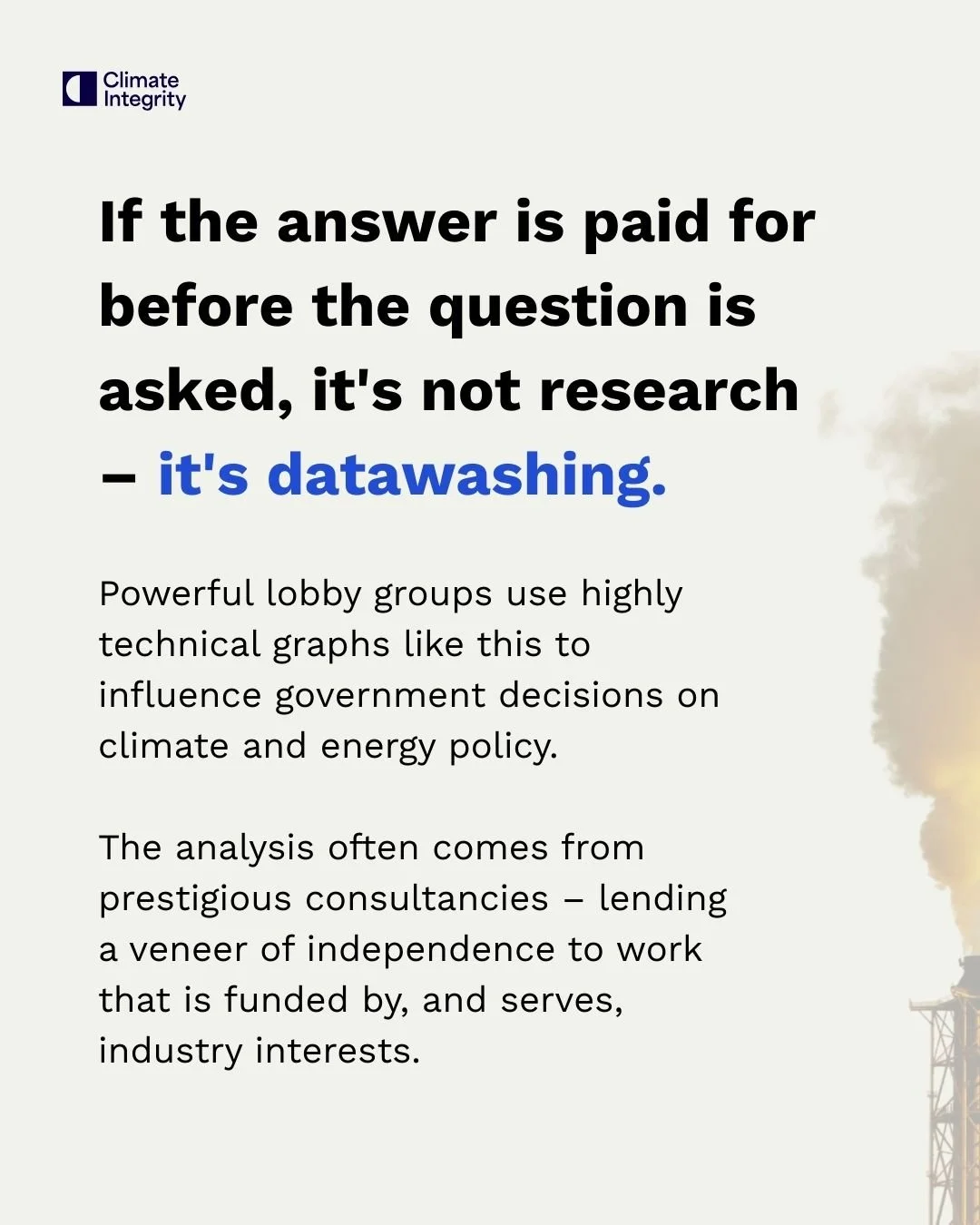
Datawashing is particularly harmful because it quietly shapes decisions.👇
By the time a graph reaches a minister’s desk, its assumptions are often invisible – but its conclusions can carry enormous weight.
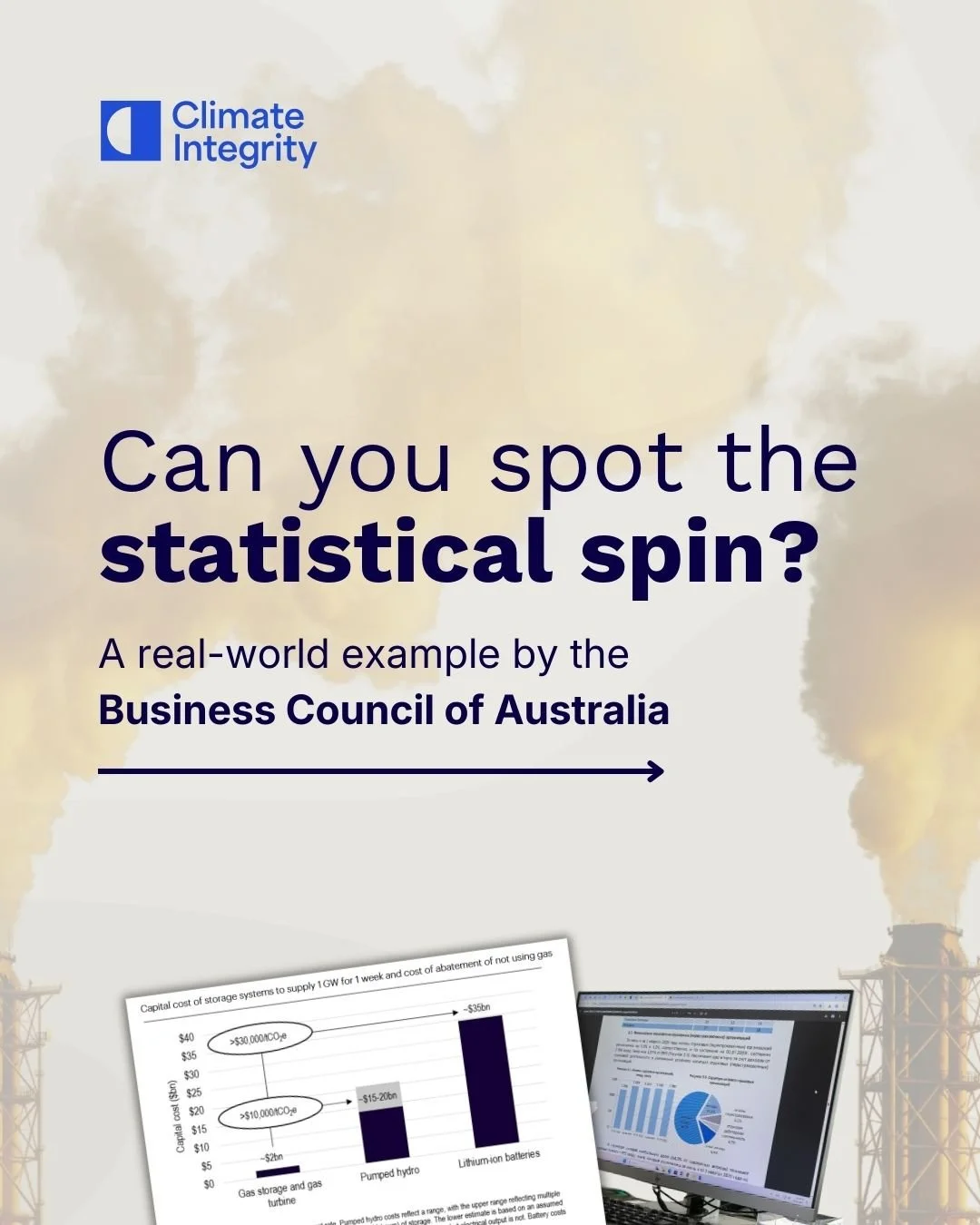
In 2023, the Business Council of Australia (BCA) used this graph – produced by consultancy ACIL Allen – to lobby the Federal Government during the Future Gas Strategy consultation.
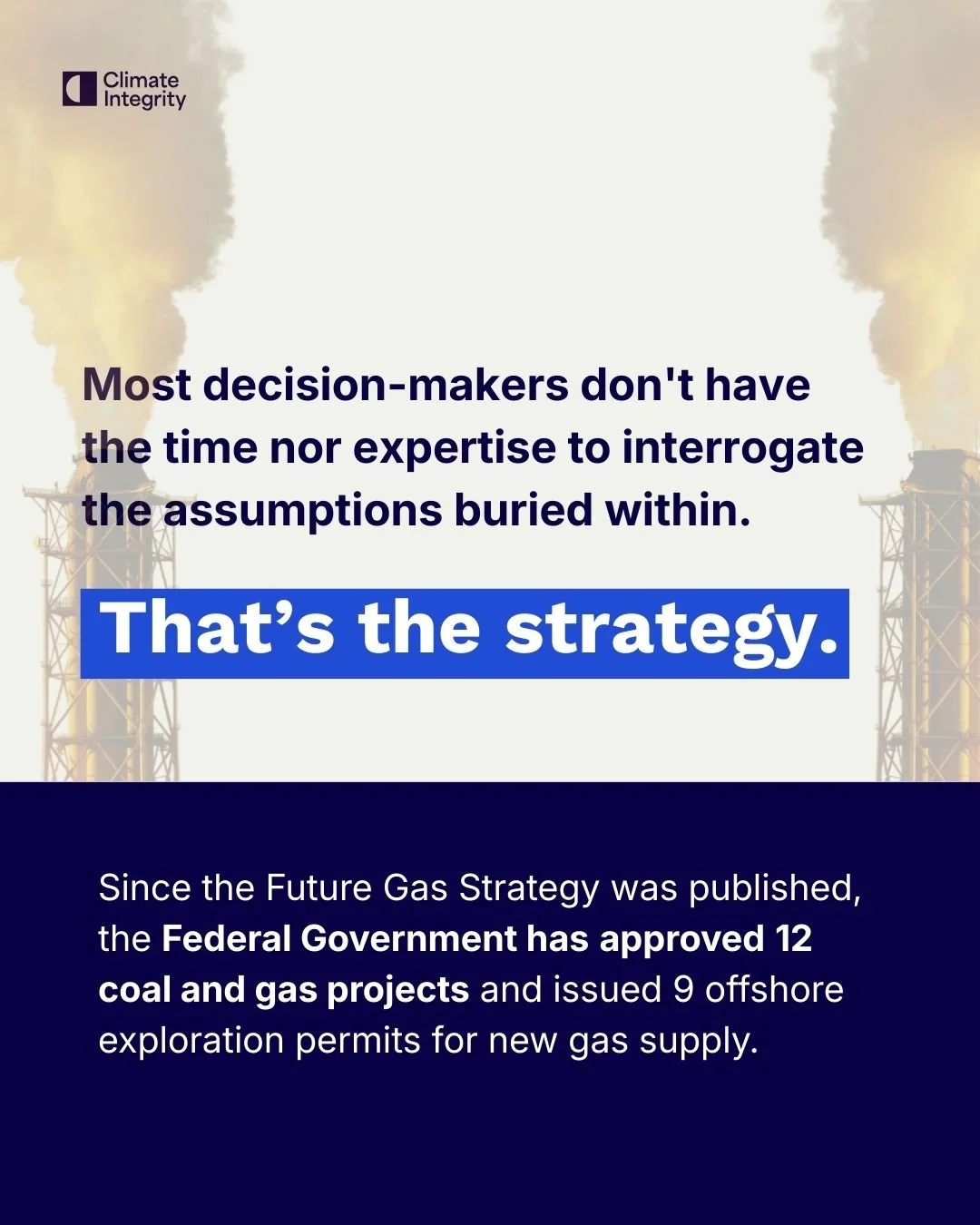
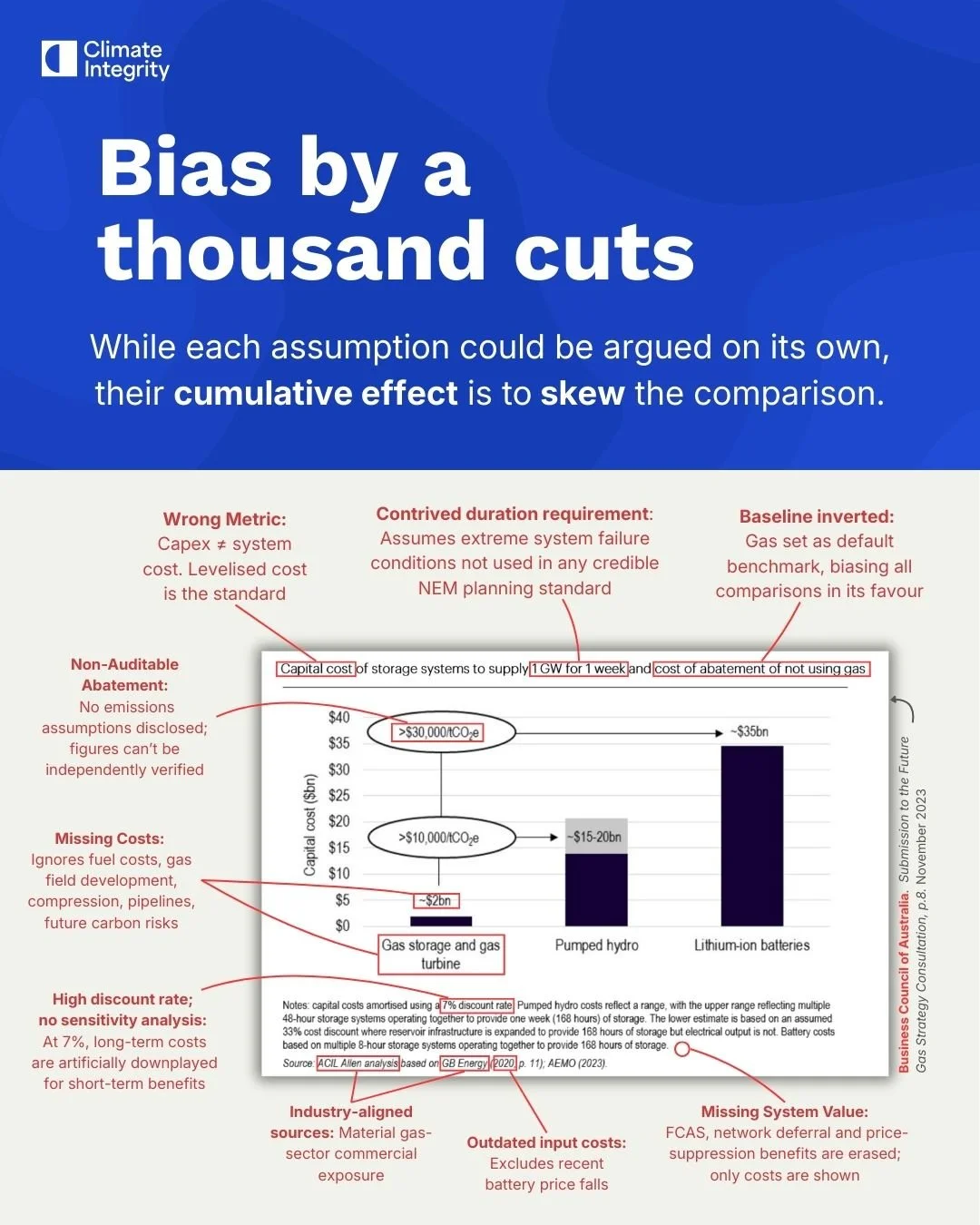
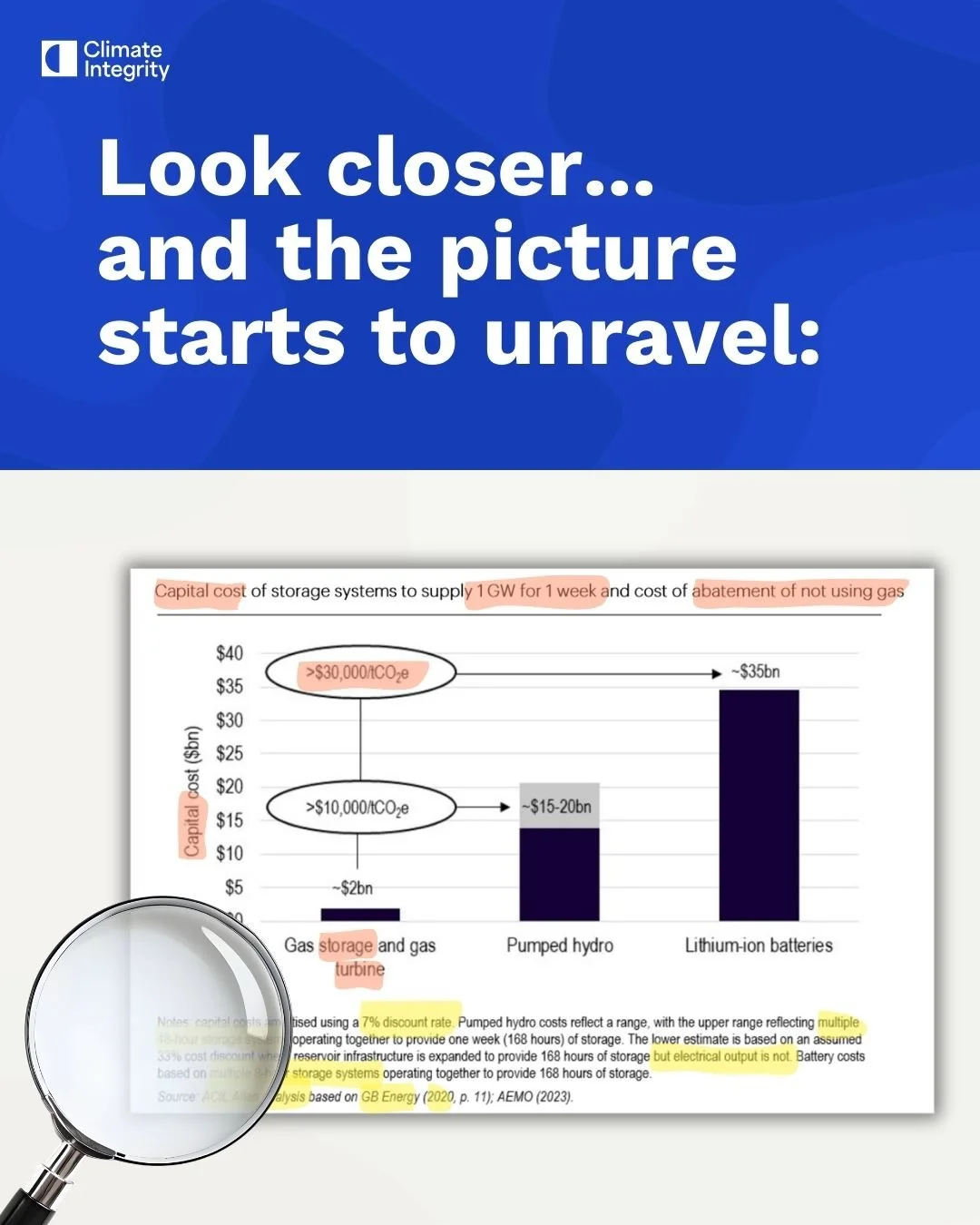
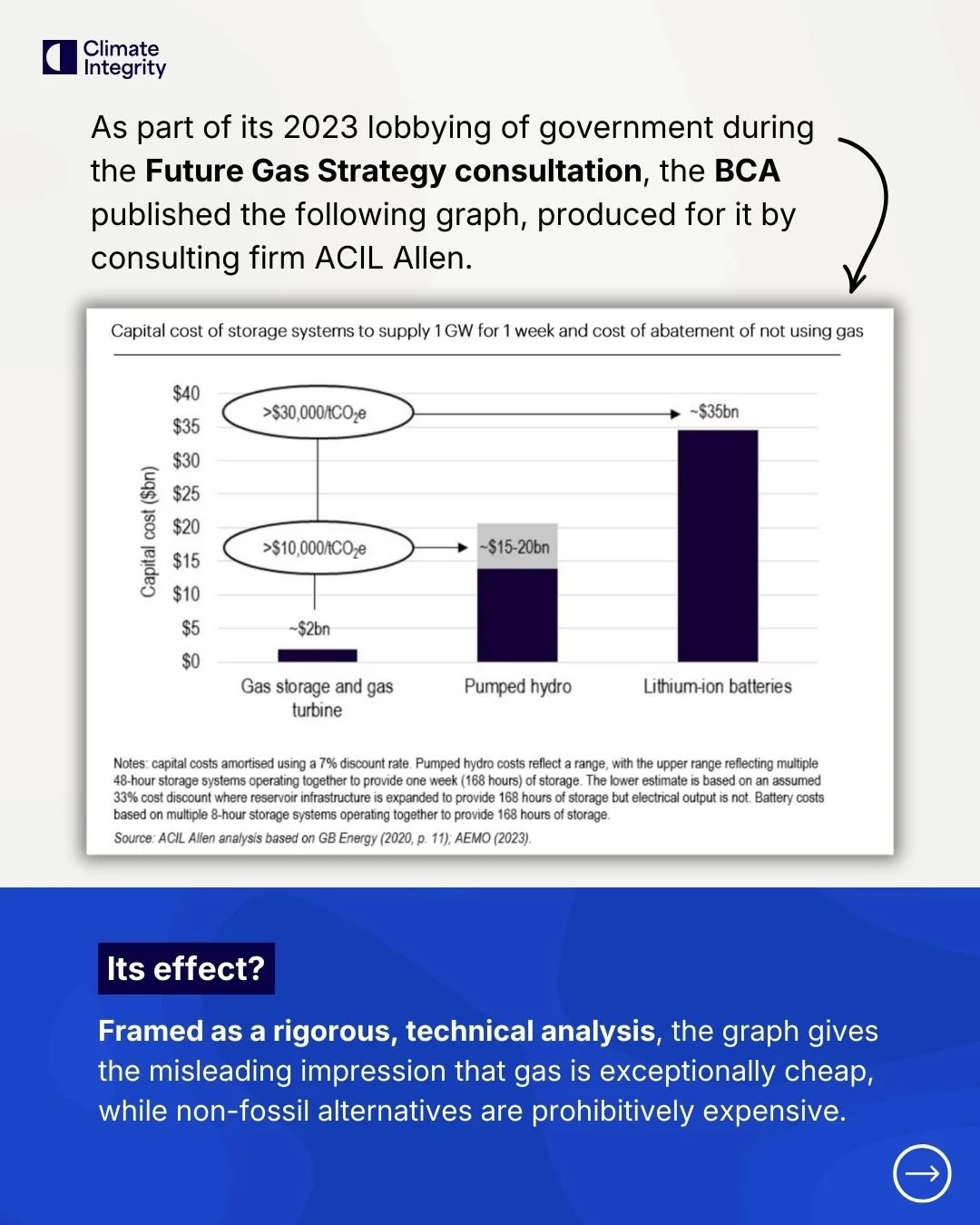
Graphs like this appear to be scientific, but lack rigour. The modelling was built on assumptions that steered the analysis toward a predetermined, pro-gas outcome, contradicting the BCA’s repeated claims of being “technology agnostic”.
This post is one case study of how data can serve an agenda. You don’t need to understand every technical detail – the point is to show how much disinformation can be embedded in a single, seemingly authoritative graph used by the BCA to push for gas expansion.
Researchers at the UTS Institute for Sustainable Futures examined the Business Council’s submission (which included this graph, and more). They found that the BCA’s submission used language and framing fundamentally inconsistent with 1.5°C pathways, by:
Promoting continued investment in fossil fuel supply and infrastructure, contrary to the emissions reductions required under credible net-zero scenarios;
Inaccurately claiming Australian LNG would support our neighbours’ pathway to net zero;
Relying on historically underperforming technologies such as carbon capture and storage (CCS);
Underestimating renewable energy’s affordability and reliability.
Taken together, the message is clear: this is advocacy, dressed up as modelling – and used to influence national energy policy.
